Agriculture, Food & Water Reuse
Farms, ranches, and gardens share the valley with the river. Clean water could help them grow again.
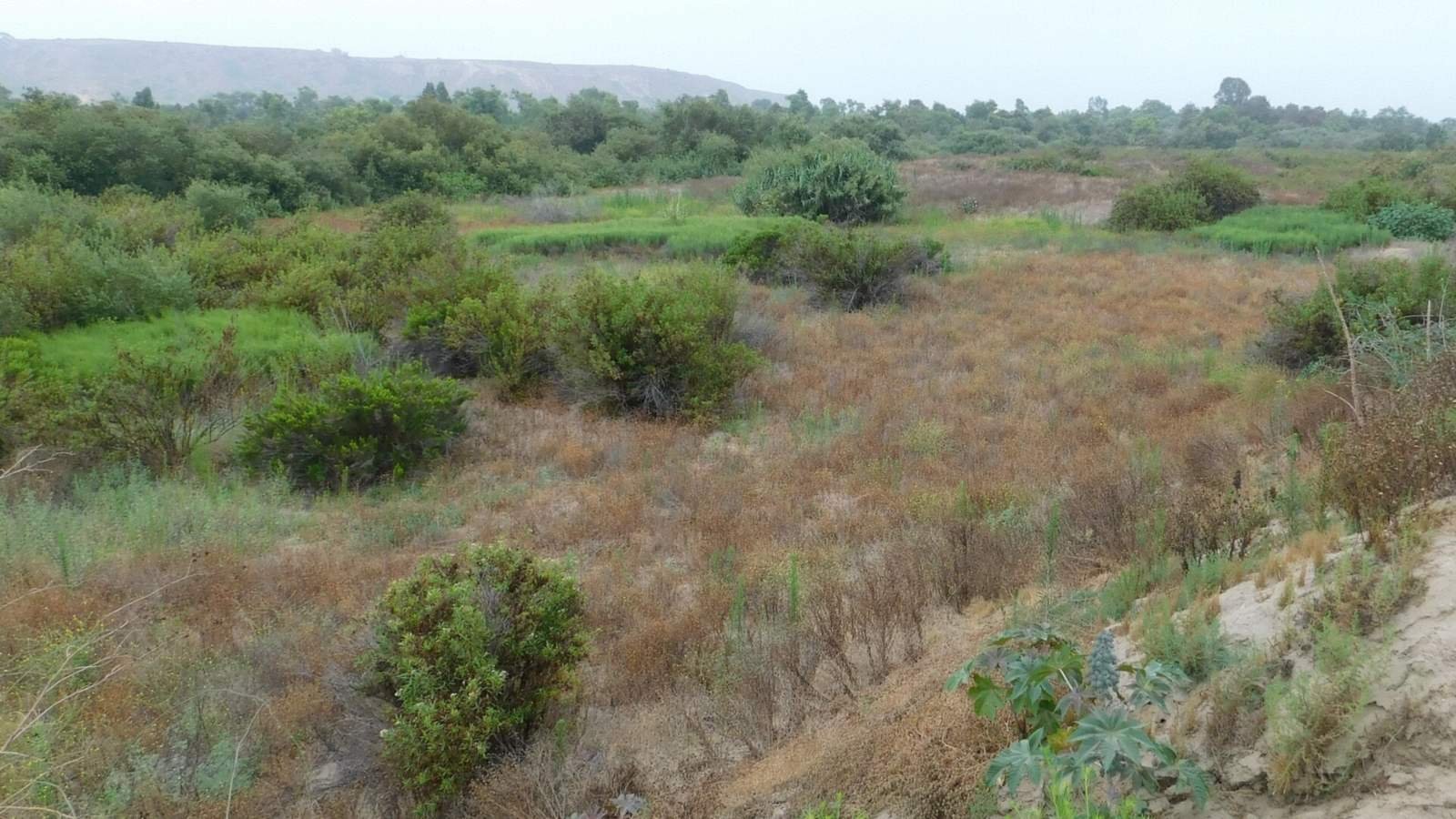
Tijuana River Valley, San Diego County, east of the estuary, July 2017. Photo: Ruff tuff cream puff, CC0, via Wikimedia Commons.Farming in the valley today
County park farmland
Tijuana River Valley Regional Park includes agricultural and small farms of about 75 acres (County of San Diego feasibility study, 2017). The park has 22.5 miles of trails for hiking, biking, and horseback riding, and its campground includes equestrian campsites (County Parks).
Community garden
The county’s largest community garden has 210 plots and 10 quarter-acre plots for farming businesses. The Resource Conservation District ran it from 2002 to 2025 and ended its management because of the sewage crisis; Olivewood Gardens now oversees it (RCD).
Ranches and horses
A 2014 reserve report called agriculture one of the valley’s primary economic activities, with numerous equestrian and ranch facilities, including the US Border Patrol’s horse patrol facility (TRNERR, 2014).
How sewage flows affect farms, animals, and food
- The California Coastal Commission found that valley fields, equestrian facilities, ranches, and community farms have the potential to be harmed by continuous sewage, wastewater pollution, and sediment. Imported water meets much of the farm demand, and river water quality is highly variable (Coastal Commission, 2023).
- Federal health agency ATSDR found that hydrogen sulfide from the sewage reached levels that could harm health for short periods at one monitoring site, and recommended preventing the cross-border flows (ATSDR, Sept. 2026).
- County warning signs in the valley advise adults, children, and animals to avoid the area and any contact with river water (KPBS, Aug. 2025).
- In a draft county economic report, valley participants described repeated flooding of farms and gardens, with costs for crop losses, soil testing, cleanup, and repairs to irrigation and fencing (ECOnorthwest for San Diego County, draft, Oct. 2026).
Food safety: what we don’t know yet
We did not find an official advisory about produce grown in the valley. ATSDR says its next report will cover chemicals in surface water, sediment, and soil (ATSDR). Until then, follow county guidance and keep river water away from people, animals, and crops.
What’s being built
The South Bay International plant expanded to 35 million gallons per day in August 2025, and expansion to 50 MGD is starting (EPA, Sept. 30, 2026 update). The federal plan includes sending treated water back to Tijuana for reuse (EPA fact sheet). A 2023 summary noted the plant expansion does not include anaerobic digestion (Coastal Commission, 2023).
How the master plan could support local agriculture
Everything in this section is a proposal by Tijuana River Master Plan. None of it is funded, permitted, or endorsed by any agency.
Recycled water for irrigation
Water polished in treatment wetlands could be reused for irrigation where permitted. California sets treatment levels by use: food crops where water touches the edible part require disinfected tertiary recycled water (EPA summary of Title 22; State Water Board).
Biogas and fertilizer
Digesters break down organic matter without oxygen to make biogas and digestate; the liquid effluent can be used as a fertilizer (EPA AgSTAR). Biogas could power pumps and farm equipment. More at Reimagine Landfills.
Algae and aquaculture
Pond systems grow and harvest algae as part of treatment (US EPA, 2011). Harvested algae and clean final ponds could be studied for feed, compost, or fish culture, subject to food-safety rules.
Wetland buffers
Treatment wetlands and ponds can hold water and sediment, giving fields a buffer between the river channel and crops.
Local jobs
Building, running, and monitoring ponds, wetlands, and digesters is hands-on work that could employ valley residents.
Soil and water testing
A shared, public record of soil and water tests would help farmers decide what to plant and where.
Help protect the estuary
Get the free Arcata Blueprint, talk to us about your watershed, or pay an invoice.