Build an Arcata-style system
How a small city on Humboldt Bay turned its sewage plant into a wildlife sanctuary, and how you can adapt it.
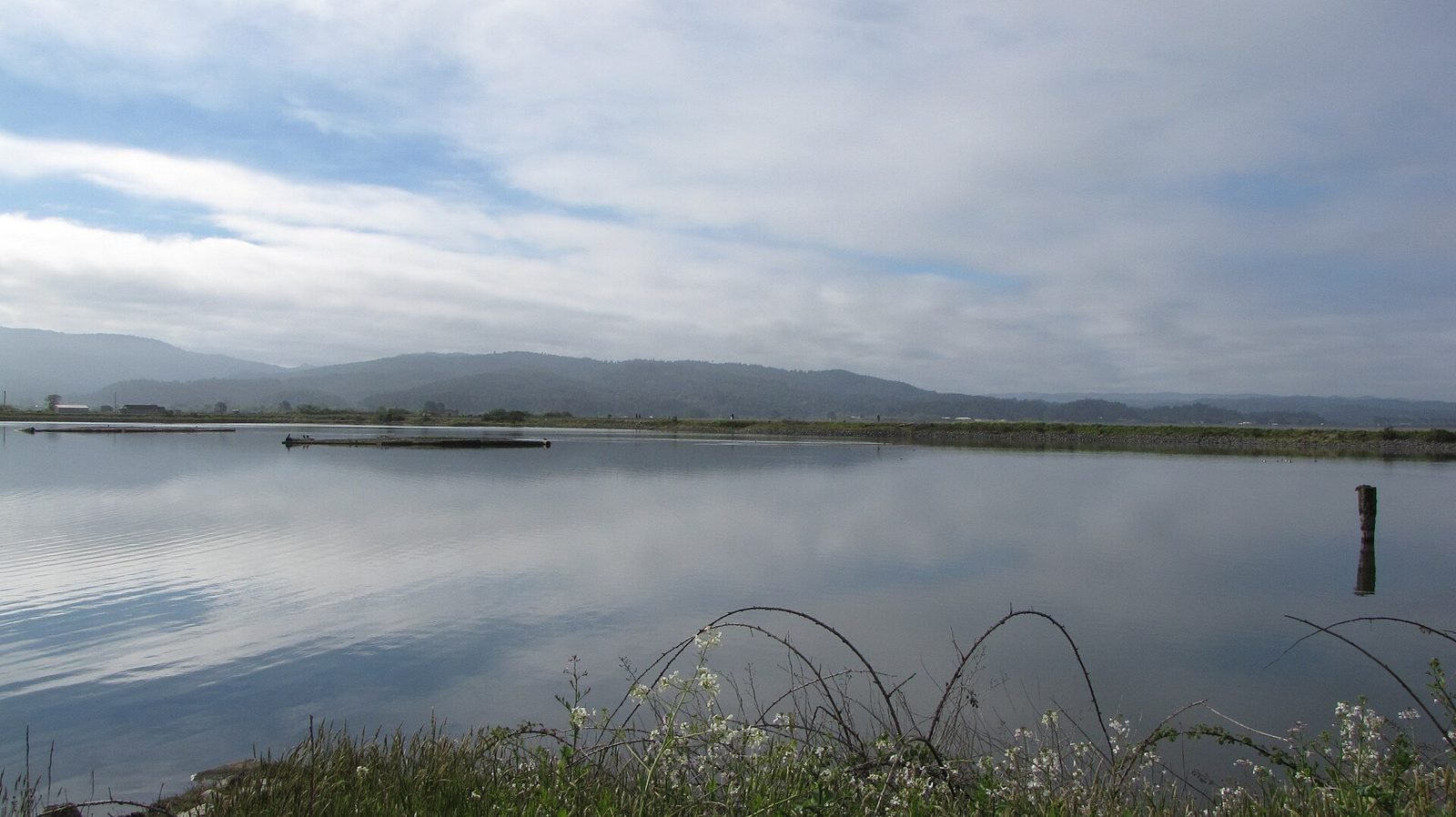
Arcata Marsh and Wildlife Sanctuary, Arcata, California, looking east-southeast across the southern end of the marsh. The marshes have polished the city’s treated wastewater since 1986 (US EPA, 1993) Photo: Monotropa uniflora, Public domain, via Wikimedia Commons.Proof it works
Replicated in places including Oaxaca (Mexico), the West Bank, Egypt, Thailand, Indonesia, and Palo Alto and Petaluma, California.
Today the City runs 55 acres of oxidation ponds and 154 acres of treatment marshes (City of Arcata, Wastewater).
Sources: City of Arcata; Friends of the Arcata Marsh; US EPA NEPIS (EPA 832-R-93-005e, EPA constructed wetlands manual).The treatment train
- Headworks and primary treatment
Screens, grit removal, clarifiers; solids to anaerobic digesters. - Two oxidation ponds
About 55 acres, ~5 ft deep, ~9 days. - Six treatment wetlands
2–4 ft deep, ~1.9 days, native bulrush. - Three enhancement wetlands
Inside the public Arcata Marsh and Wildlife Sanctuary. - Disinfection, then Humboldt Bay.
Performance (EPA, 1997 averages)
BOD (biochemical oxygen demand), mg/L
| Measure | Raw | Final |
|---|---|---|
| BOD (mg/L) | 174 | 3.3 |
| Total suspended solids (mg/L) | 214 | 3 |
| Total nitrogen (mg/L) | 40 | 3 |
The Oswald–Green Advanced Integrated Pond System
Arcata uses conventional oxidation ponds plus wetlands. For new plants, the strongest pond design we know of is the Advanced Integrated Wastewater Pond System (AIWPS), developed over about 50 years of research by William J. Oswald, UC Berkeley professor of civil and environmental engineering and public health, with F. Bailey Green, his former PhD student in Berkeley’s Energy and Resources Group. It is often called the Oswald–Green system.
Instead of running blowers, it uses anaerobic fermentation for solids and algae photosynthesis for oxygen. Sludge handling is largely eliminated for many years, and the methane can be captured as biogas. US EPA lists AIWPS plants at St. Helena (1965), Hollister (1977), Delhi (1998), and Hilmar (1999), California.
The pond train, A to D
- A. Advanced facultative pond with in-pond anaerobic digester (fermentation) pits, 6–8 m deep. Raw sewage enters at the bottom; solids settle and ferment to methane.
- B. High-rate algal pond a shallow paddle-wheel raceway, under 1 m deep. Algae make oxygen for bacteria and take up nutrients.
- C. Algae settling pond algae settle out and are collected for drying.
- D. Maturation pond storage, further disinfection by sunlight and time, and solids removal before reuse.
Experts and resources
For specifications, research, and people who could help with design. Listing a resource does not mean they endorse or work with this project.
UC Berkeley
Where Oswald taught and AIWPS was developed. Berkeley’s tech-transfer office documents the Oswald–Green company and the AIWPS technology.
Oswald Green Technologies (UC Berkeley IPIRA)
Berkeley Civil & Environmental Engineering
UC San Diego
The California Center for Algae Biotechnology (Cal-CAB), based at UC San Diego and Scripps Institution of Oceanography, works on algae biotechnology, including algae grown in wastewater.
About Cal-CAB
Cal-CAB people
Scripps Institution of Oceanography
Cal Poly San Luis Obispo
Professor Tryg Lundquist, PE (UC Berkeley PhD), researches natural wastewater treatment with ponds and wetlands and algae processes.
Credit for AIWPS belongs to William J. Oswald (1919–2005) and F. Bailey Green. We are not affiliated with UC Berkeley, UC San Diego, Cal Poly, or Oswald Green Technologies.
Nine steps
Short and simple. Each one builds on the last.
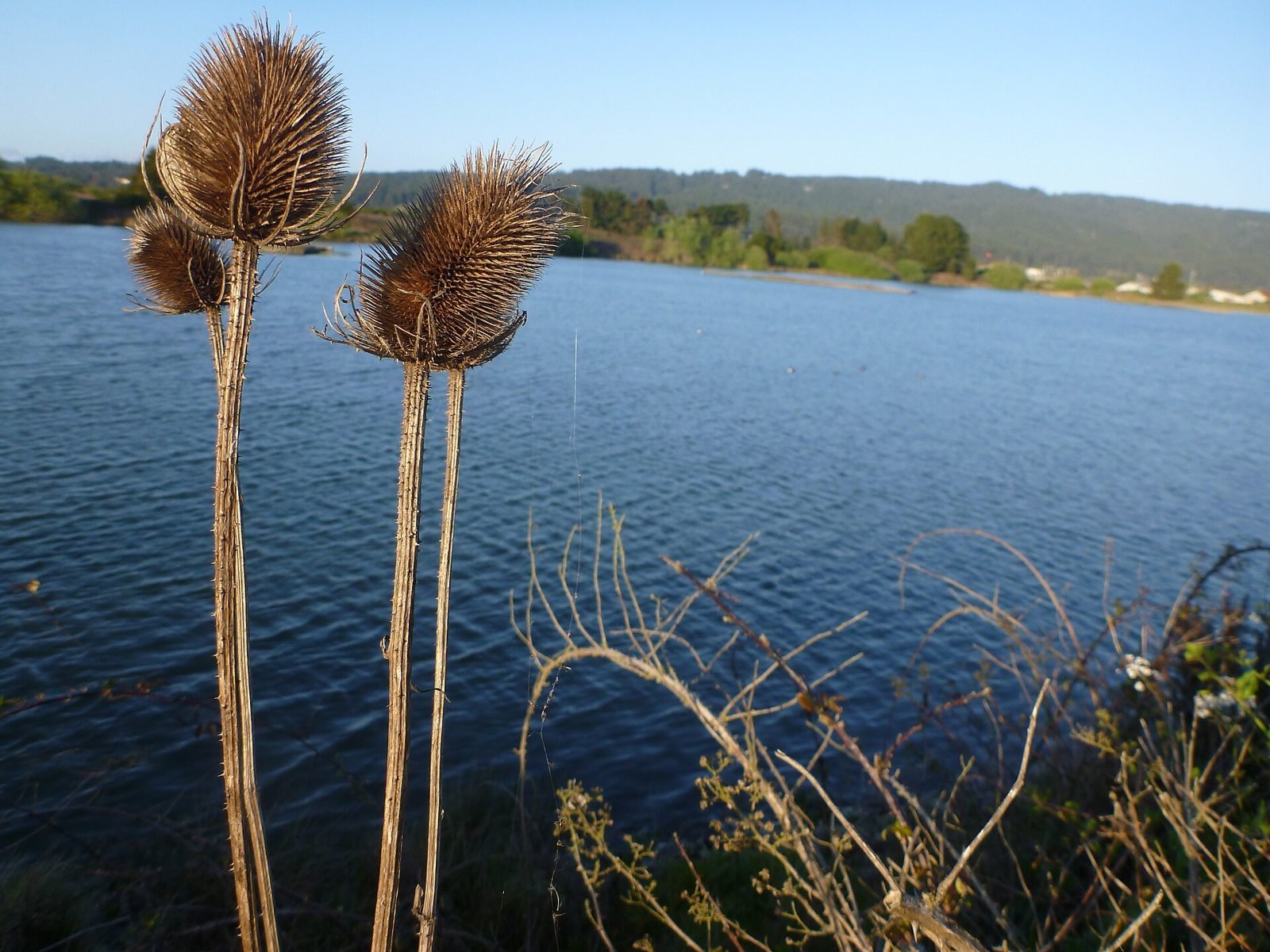
Open water and shoreline plants at the Arcata Marsh, Arcata, California. Photo: Spifferella, CC BY-SA 2.0, via Wikimedia Commons.- 1
Assess flows and land
Measure flows and loads; map land, soils, and where treated water will go.
- 2
Run a pilot
Arcata piloted wetland cells from 1979 to 1982 before going full scale.
- 3
Talk to regulators early
Agree on discharge limits and how pilot results will be judged with your state water board.
- 4
Headworks and digesters
Screen, settle, and digest solids, and capture the biogas. More at Reimagine Landfills.
- 5
Oxidation ponds
Sun, algae, and bacteria treat the water over days, not hours.
- 6
Treatment wetlands
Shallow cells planted with native bulrush lower BOD further.
- 7
Enhancement marsh
Final marshes double as a public wildlife sanctuary.
- 8
Monitor everything
Sample every stage; partner with a local college, as Arcata did with Humboldt State.
- 9
Scale to your population
- Town One train of ponds and wetlands near the plant.
- City Parallel cells, biogas cogeneration, wetlands as a park.
- Region Decentralized systems can beat one plant with long pipelines.
- State Permit pathways, pilot funding, shared design standards.